Vision
Our Vision: Towards Zero-Waste Operations with Sustainable Solutions
For us, sustainability means more than environmental protection – it is an essential part of our corporate philosophy. As a leading manufacturer of low-carbon ferrochrome, we take responsibility for the future. We develop innovations that combine ecological and economic goals, thereby setting new standards for resource-efficient metallurgy.
From By-product to Future Building Material
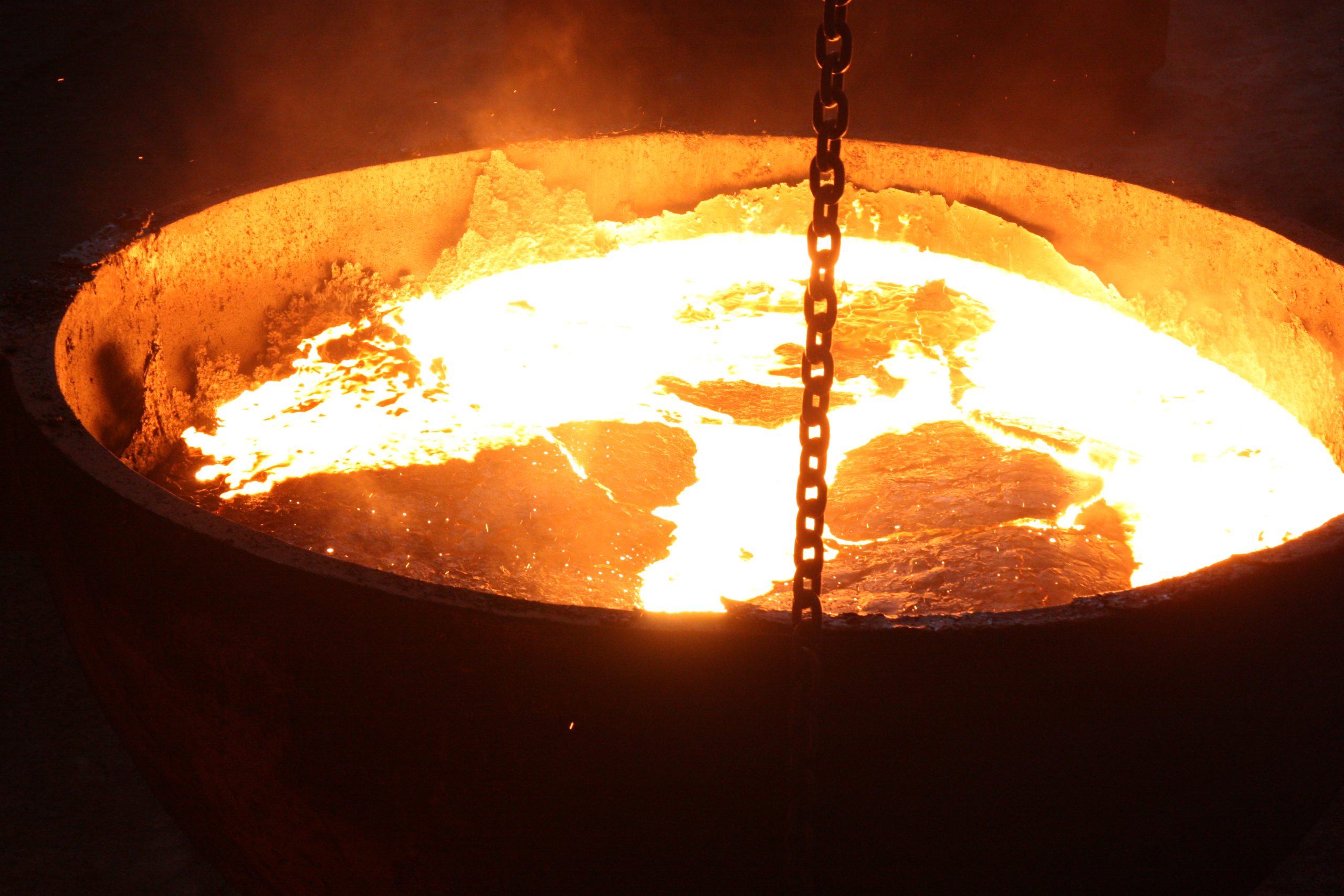
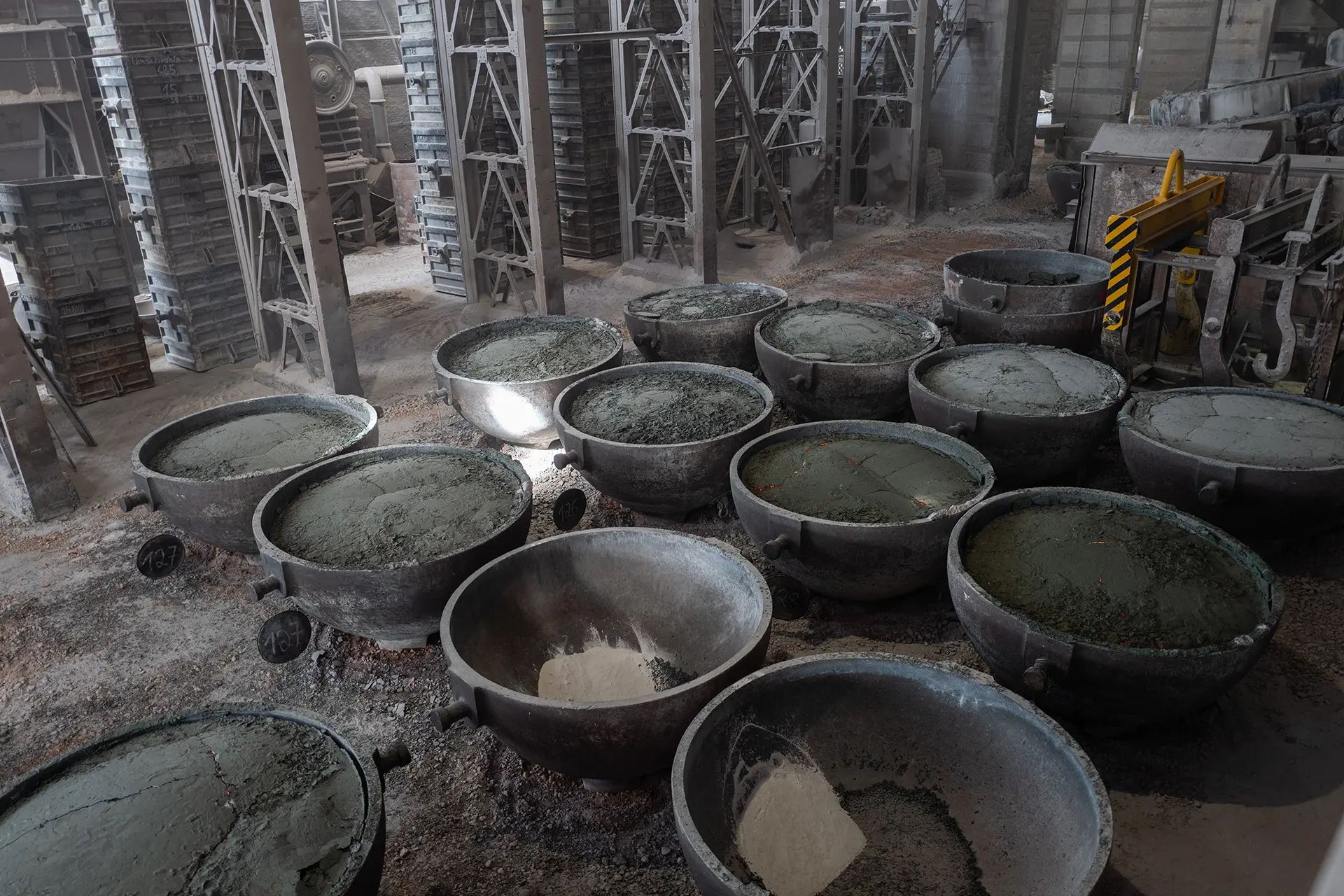
The production of low-carbon ferrochrome (LC FeCr) generates calcium silicate slag. Through innovative process optimization at Elektrowerk Weisweiler, this by-product is to be specifically modified in the future so that it can be used as a valuable raw material for the cement and concrete industry.
The focus is on the targeted processing and treatment of hot slag to unlock different material properties and application possibilities. For example, the material can be processed into granulated blast furnace slag with latent hydraulic properties, as investigated in the “PHöMixBeton” project together with research partners and supported by the Federal Ministry of Education and Research. Furthermore, other utilization options are being examined, such as its use as carbonated, partially reactive material with pozzolanic properties as a clinker substitute or as a mineral filler in building materials.
The aim is to integrate the by-product into building material applications with the highest possible value, thereby contributing to a more resource-efficient and climate-friendly construction industry.